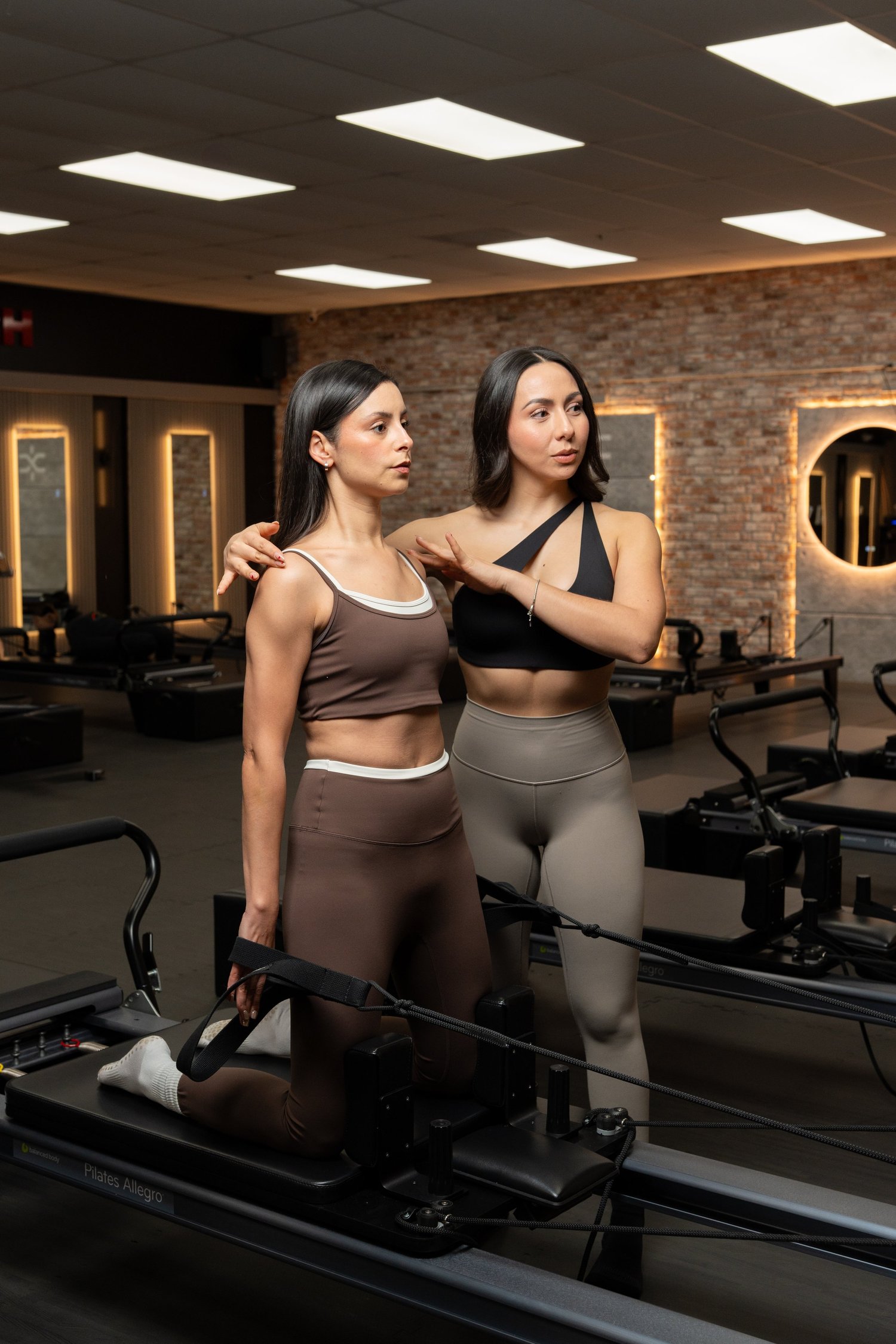
The first time you see a reformer, it can read as intimidating: a carriage, springs, straps, and a coach asking you to move slowly. That slowness is the point. The machine is there to make controlled movement easier to feel — not to test how much you can force.
What the reformer actually does
A reformer combines adjustable resistance with controlled movement. Springs and straps add tension while the carriage moves, so you can work deep stabilizing muscles and larger muscle groups in the same session.
The method at XFORM is built around alignment, posture and stability. Because the resistance is adjustable and the movement is controlled, the work is low-impact compared with loading a barbell. That makes it a useful complement to strength training, not a replacement for it.
The first class is more approachable than it looks
No experience is needed. XFORM classes are open to all levels, and the coach sets up the reformer for your body before the session starts. If you say it is your first class, they will explain the springs and offer modifications.
Small-group attention matters here. A coach who can see everyone can correct a shoulder position or slow a movement down before it becomes a habit. You are not expected to know the names of the exercises on day one.
What to expect in the room
A class typically moves through a coached warm-up, a sequence on the reformer, and a finish that brings the breath and body back down. You will hear cues about posture, breathing and control more than you will hear counting.
The work changes with the springs, the tempo and your range of motion. If something does not feel right, say so. A good coach would rather adjust the setup than have you push through a position that does not fit your body.
- Wear clothes you can move and stretch in.
- Arrive early enough to meet the coach and set up.
- Tell the coach about any injury or movement limitation.
- Ask what to bring when you book — the studio can confirm.
How to make the first month count
Consistency beats intensity. Two or three sessions a week gives you enough repetition to learn the setup and enough recovery to keep the quality high. The goal of the first month is not to survive the hardest class; it is to learn how to move well on the machine.
Keep a simple note after each class: what felt stable, what felt confusing, what you want to ask about next time. That is more useful than chasing a number on the springs.
Booking without the guesswork
After you purchase a class package, XFORM sends an email to set up your account. From there you book classes in the Extreme Fitness Gym app. Coaches are bilingual in English and Spanish, and private sessions are available for birthdays and other celebrations.
If you want to see the room before committing to a package, use the free class form or call the gym at (619) 500-5120. Ask which class is best for a first-timer and what to bring.
The reformer does not decide how hard the class is. The springs, the pace and your coach do.
Try it now
Program Finder
A short quiz that matches your goal, age group and training style to XFORM Pilates, recovery, group training or the youth program.
This guide is general information, not medical advice. Ask a coach or your doctor before changing your training.